

My day hike pack and everything I put in it…
Whether you are walking five miles or 25 on your day hike, this is a post for you. It’s all about what I’ll be carrying in my day hike pack in 2024.
Hiking is one of my favourite things to do outside. Especially day hikes – walks that cover a handful of miles and a few hours of my time, taking me to see beautiful countryside and big views. Yes, multi-day hiking makes for a fantastic adventure (more please!), but a hike of any length is a fantastic way to spend some time outdoors.


While the contents of my pack are very much personal preference (and revolve around drinking tea…), I like to think I’ve dialled in my list to a point where I’ve got everything I need to be safe and keep comfortable, and nothing I don’t. Hopefully this will help you look at your own day hike pack kit list and make some adjustments – or simply confirm that you’re all sorted.
As a keen hiker, I’m basing these tips on my knowledge after hundreds of day hikes completed – experience-based tips rather than anything legally binding. You know, in case that needs spelling out.
I’ll link to reviews or features where I’ve written them, and out to external websites where relevant (links may be affiliate links). Please feel free to ask questions about specific bits of kit, or kit in general in the comments below, I do love a bit of gear chat.


What I Wear for a Day Hike
This article is about what’s in my day hike pack, but I can’t talk about what I take hiking without mentioning what I wear. I’ll be brief to leave space for more words on the pack contents, but do feel free to ask if you have any questions about this section.
Comfort is absolutely key, and that is my main concern when dressing for a day hike. My general hiking outfit rules are very simple:
Up Top
On my top half I go for a short-sleeved non-cotton base layer (ideally merino, but something manmade if not), designed to wick any moisture away from my skin. Over that, I wear a thin but warm mid layer (also not cotton), normally with a half-zip opening so I can ventilate without taking it off. My bra of choice is a low or medium impact sports bra with wide and unfussy straps and no clasps/adjusters to ensure both comfort and support.
In very cold conditions I either switch my short-sleeved base layer for a more thermal-leaning long-sleeved one, or double up and wear both. My mid layer and bra remain the same.
Specifically speaking, I wear an Isobaa merino tee, because it’s the best basic tee I’ve come across for my shape – I buy mine in the sale when they’re 50% off, which makes them around £30 each. My mid-layers of choice are either my bright green Mountain Equipment Women’s Lumiko Zip T Fleece, or my mustard Terrex Everyhike Half Zip fleece – both are excellent. There are a bunch of bra examples in this article about sports bras for hiking – this is my current favourite.

Down Below
On my bottom half I wear my most comfortable pair of trousers – normally something designed for hiking, but not always. I never ever wear denim on a day hike, anything heavy, or anything that doesn’t provide freedom of movement. And under those, a pair of microfibre briefs; I don’t hike in my everyday cotton knickers because I find they very quickly get uncomfortable.
This year, I will mostly be hiking in my new Montane Terra Stretch Pants, purchased towards the end of last year (in the sale, always in the sale!). These replace my worn out Craghoppers Kiwi Pro Stretch, which have been my go-to trousers for years (and years). I’ve switched because Craghoppers seem to have changed the cut of the Kiwi, and made them less stretchy, so I decided it was time to try something new.
My other hiking trousers are the adidas Terrex Liteflex Hiking Pants, which are basically loose fitting tracksuit bottoms designed for hiking (I love them!), and the Craghoppers Airedale Trousers, which are lined and waterproof, perfect for cold and damp days. I once had a pair of Fjallraven Keb Trousers, which are probably the ultimate hiking trousers, but I gave those away because I got too wide – maybe one day I’ll treat myself to another pair. I digress.
I’ve still been unable to spend good money on hiking knickers; I just can’t see the need when M&S do decent enough microfibre ones in packs of five.


On my Feet
For footwear, I choose between my hiking boots and trail shoes based on two very important criteria – the trail and the weather. I will almost always choose my boots, because they provide me with the greatest comfort and support (never undervalue wearing what you are used to). Hiking trainers (or trail runners) are also a good option.
I pair those with decent hiking-oriented socks. These are my best protection against blisters and fatigue, and the benefit of choosing wisely cannot be underestimated – swapping between midweight and lightweight depending on the season.
I have three pairs of hiking boots on the go at the moment, but it’s the Meindl Bhutans I will be hiking in most this year. I just trust them so much. Although I do intend to hike more in my adidas Terrex Free Hiker trainers, as I genuinely want to see if I can be persuaded away from boots. I’ll let you know.
For socks, I have a small selection Bridgedales and Darn Toughs to choose from depending on the temperature and my mood

Other Clothing
I’ll cover my various additional waterproof layers, and a bunch of other clothing ‘accessories’ including headwear a little further down in this article. There are things that need to fit inside your bag, so I count them as day hike pack contents.
My Day Hike Pack
Right, moving onto the topic of this post proper, starting with my day hike pack itself.
I have the Osprey Tempest 24l pack (which I got from Cotswold Outdoor, in the sale of course), bought to replace my old green Osprey Tempest 20l day pack which had too many holes in it to be useful anymore. It’s now 12-months old, and I can confidently say I will be using this as my day hike pack in 2024 – it’s proven to be the perfect choice for me.
The bag is lightweight, has an adjustable moulded back with a vented panel, stretchy side pockets for bottles, a couple of hip belt pockets, space for a water bladder (outside the main compartment), a couple of useful zipped pockets for bits and bobs, a stretchy front pocket, and various attachments for walking poles, an ice axe, or whatever else I want to carry.


Plenty of Space
For bog standard day hiking, a 20-30l pack is plenty, and this 24l size is just right for me and everything I need. I can fit everything listed in this article in this bag (or on the outside as appropriate), with space to spare to squeeze my mid layer in if I so choose. Handily, it has a bucket style top with double zip, which opens fully so I can easily access everything inside the bag.
If, for whatever reason, I need to carry a lot more on a day hike – maybe I’m planning to cook in the middle of the day and so want my stove and extra food, or need extra equipment due to how I’m planning to spend the evening, then I will take a larger pack. But for the majority of outings, even winter ones, this day hike pack is perfect.
If I’m taking them, then I attach my walking poles to the outside of my pack.


Mapping
I normally plan my day hike routes in advance. I may choose a well-known and way marked trail such as the Isbourne Way, pick one from book of walks (like these Cicerone ones I really like), find a route that looks good on OS Maps, use a recommendation from a friend, or plot one myself from scratch. Regardless of where the inspiration came from, I will have a route prepared and ready to go.
Which means I also have a map. Always take a map.
More often than not, that map is on my phone. There’s nothing wrong with going digital for your navigation needs these days – the OS Maps app is excellent. But I also carry a paper version, just in case my phone runs out of battery, gets waterlogged, or something else weird happens. What I don’t carry is a whole OS Explorer Map, I can’t be doing with the bulk, instead I carry an A4 printout of my route (plus a fair chunk of the area around it, to allow for diversions or changes of mind), which I keep in a thin plastic wallet.
If I’m somewhere I don’t know, or the weather looks pants, I also carry a compass – which is kept with the emergency kit I mention a bit further down this article.

Everyday Carry / My Ditty Bag
Inside my day hike pack, I organise my kit into a handful of small dry bags (these are the drybags I use). This keeps everything organised and protected when I’m on the trail. I would highly recommend using small bags like these for things inside your pack, although maybe go for different coloured ones to make your life on trail a little easier – it’s just the Lomo ones really are good for the price.
I use a small 3-litre dry bag as my ditty bag – where I keep all my everyday carry items. All of these items are self-explanatory to be honest, they are the things that I have with me whatever my activity (and whatever bag I am using).
Handbag Contents
This includes my wallet (complete with my new Rolling Square AirCard, which should mean it’s harder to lose now), my car and house keys (always inside a dry bag!), and a few coins, because public loos still don’t all take contactless payments. I’ll also include a small battery pack and short cable so I can charge my phone when out on the trail, a tiny notebook and short pencil (pencil rather than pen as they always work), and a pair of headphones in a little pouch – wired so I never have to charge them. And finally in that same bag I include my sunglasses when I’m not wearing them (in a little bag), a little pot of Vaseline, and some tissues. Normal handbag contents, really.
Having these bits in a bag together means I can easily remove that small bag to keep with me should I want to leave my bag behind – even if that’s just so I can nip to the loo in a service station on my way to or from the trail.
The other bit of related everyday carry gear I have will normally be hung on the outside of the pack rather than being inside. A tiny microfibre towel is such a useful bit of kit for drying my face, hands, feet, camera lens, anything. I never fail to use this when I’m out hiking.

Food and Drink
One of my favourite things about going on a day hike, is finding a nice spot to sit, relax, and enjoy a break. I hike for the views and to find peace, not to rush to the end. So, I go prepared for a proper stop (or two).
This means I always take my favourite unassuming bit of hiking gear with me – my little PACMAT Patch picnic blanket. Measuring 60cm square when flat but rolling up into a handy little mesh bag that fits in the palm of my hand, this thermal and waterproof mini picnic blanket is just the right size for one (large) bottom. Perfect for grassy viewpoints or even damp picnic benches. No hiking picnic lover should be without one of these, it’s so good.
How much food and water I carry depends on the length of the hike. As a general rule, if I’m going to be out all day, then I will carry 2-litres of water plus a flask of tea, along with a full-on packed lunch and a bunch of snacks. If I’m hiking for a couple of hours, then I might just take 1-litre of water/tea and a few snacks. If I’m expecting to pass a café, or end at a pub, or start with a belly full of breakfast, then I will adjust accordingly. One thing I never do is go on a hike without water or snacks!


Containers
For transporting my water and food, I make use of a bunch of very old and knocked about containers – nothing new or special here for this year, but simple tried, tested and trusted gear.
I pack my lunch into my green SIGG tin, and use another small dry bag for my snacks (although a friend got me a sizeable snack bag for Christmas so I will need to try that out!). Water goes in one of a bunch of old SIGG and Klean Kanteen canteens, or I’ll put my 2-litre water bladder into the slot at the back of my pack if it’s a big day. And my tea goes in either my Hydroflask or Klean Kanteen flask.
Exactly what food I pack is completely down to what I fancy. Here’s an old post on fuelling long-distance hikes – let me know if you’d like a refresh.

Weather Proofing
Hiking in the UK means I never leave the house without some kind of rain protection – the level of which depends on the weather forecast, terrain, and likely exposure. Hiking in this country also means I need to be prepared for the hot sun, too – it’s a real game we play!
At the very least, I have my waterproof coat. This fits inside my pack when I’m not wearing it (often in the mesh pocket on the outside), which is important as if it’s not wet or cold, I really don’t want to be wearing it. My most packable waterproof is my The North Face Vanadium waterproof jacket, a very sound Gore-tex shell which has been getting me through rainy days for over ten years.
If there’s any chance of rain then I carry my waterproof over trousers (a cheap pair from Decathlon because I got too wide for my Berghaus Deluge pants). Then if the weather looks really bad, or there’s likely to be bog, then I also carry my gaiters, although I’m pretty poor at actually putting those on, and they very often return home completely clean when my legs are covered in peat bog.
I should add that I’ve taken delivery of a set of very compact and lightweight waterproofs courtesy of Mac in a Sac and Ordnance Survey in the last few days. I’m looking forward to testing the Origin 2 Ocean Blue Jacket and Origin 2 Navy Overtrousers in the coming weeks and will be sure to let you know if they make it into my day hike bag on the regular.

On My Head
Wet or warm, I always wear a buff, which I can’t hike without, it’s like my comfort blanket. I also always have my lightweight baseball cap, which hangs neatly on my pack when I don’t want to wear it. Honestly, a baseball cap when hiking is an absolute must – good for creating a bit of shade for your face when it’s sunny, and for keeping the rain out of your eyes when it’s wet. Baseball caps are also the best way to keep your hood up! Mine is The North Face Horizon Cap.
If the weather demands it, then I’ll have a beanie hat (no bobble, so I can still wear my coat hood), and a pair of warm but thin gloves (these Sealskin ones are my current favourite). Also dependent on the weather, I may also carry (or wear) my puffy coat to ensure I don’t get too cold.
Oh, and I mustn’t forget to mention I also carry a waterproof pack cover. My Tempest didn’t come with one, so I bought one, and keep that in the bottom of my bag just in case.


On Peeing Outdoors
I will always use public toilets where available, but that’s not always possible. I therefore always carry a small toilet kit, so if I’m caught short, I can still practice good hygiene and leave no trace – even perched behind a tree.
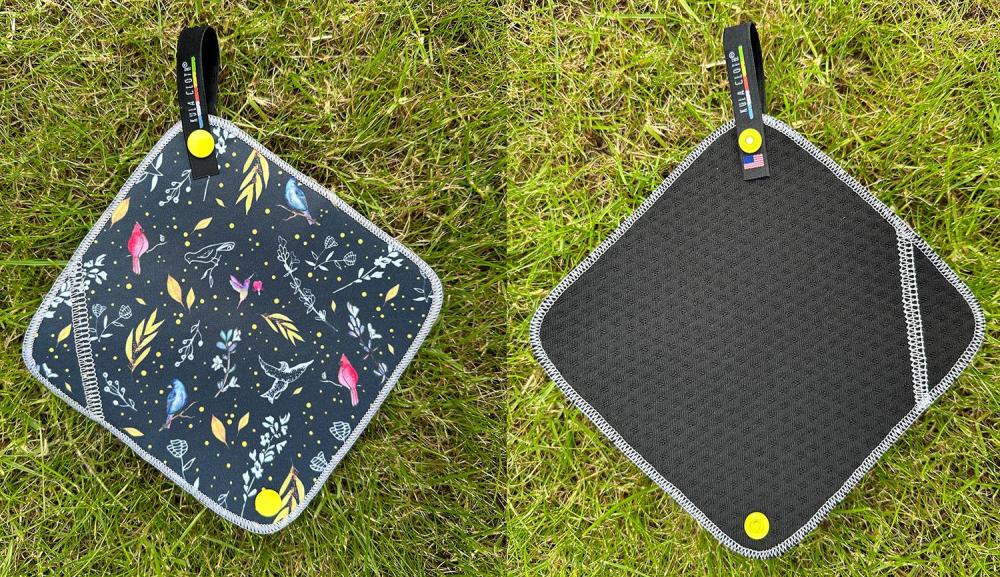
This year, that will mean taking my Kula Cloth, which is a reasonably recent addition to my day hike pack kit. I’m so glad I bought this, as you will see from my review, I wish I’d bought one years ago.
I also carry a small freezer bag containing some toilet tissue and a small tube of hand sanitiser, along with at least one more sealable freezer bag in which to pack out my used tissue. This little toilet kit is normally stowed in one of the two hip belt pockets so it’s easily accessible.

Emergencies and Spares
In another little dry bag, I keep a handful of things that I probably won’t need, but should carry anyway. These are the things that will keep me safe if I get into difficulty, something breaks, or I get lost, and having them at least helps me feel prepared. This isn’t about packing my fears, but rather ensuring I have a sensible minimum emergency kit.
It includes a small first aid kit, a spare buff (yes okay, that is definitely a comfort blanket), a spare pair of socks (no-one wants cold damp feet), a small pack of antibacterial wipes, a whistle (which is integrated into my pack), some sun cream, and the compass I mentioned earlier. These are the things I’ve chosen as part of my emergency kit, I’ve found it to be plenty for most of my hikes.
My first aid kit is pretty basic: normal plasters, blister-specific plasters, antiseptic cream/wipes, bite cream, pain relief, a stretchy bandage and safety pin, some tape, some normal tweezers, and a tick remover. This little lot means I can deal with the most common hiking related issues. Anything more serious and I am left to use my imagination and call for help.

Extra Gear
I do increase the number of things in this category should the distance and terrain require it. Things such as a head torch (and spare batteries), a larger battery pack for my phone (so I can charge more than once), my small Leatherman or pen knife, duct tape, paracord, a larger first aid kit, a survival blanket and/or bag, that sort of thing.
And on a really big day hike I might also pack my Jetboil, with a Firepot meal pouch and some teabags. A hot meal and drink can be everything on a particularly gnarly trail or long day.
I make a call on these extras based on the hike I’m going on; how rural I’ll be, who I’m going with, whether I’m responsible for anyone else, how long I’m likely to be out, how many day hikes I’m doing in a row, that kind of thing. And of course, if I do take all these extra things, I will also use my bigger day hike pack – the Osprey Tempest 40l I carried on my UK Coast to Coast hike.
It is impossible to cater for every eventuality in my day hike pack, that can quickly lead to an incredibly heavy bag, and make walking way more difficult than it ought to be. But it is important to give proper thought to safety when I’m heading out hiking, and I always er on the side of sensible when it comes to what I carry.


Hike Your Own Hike: Pack Your Own Pack
I hope this list will give you some guidance for your next day out enjoying the countryside. At the very least, I hope this article gives you a bit of an insight into what’s in that bright orange day hike pack of mine when you see it in photos here on Splodz Blogz and over on Instagram!
Ultimately, please know that you can and should include whatever you feel you need in your day hike pack – this is all part of hiking your own hike. If having a spare pare of knickers, some flip flops, a towel big enough for your whole body (for those mid-hike dips), food for the ducks, or a full-on bivvy bag will make your experience a much better one, then please feel free.
Do you have anything to add? Things you think I should leave behind when I next go hiking? Better options than the ones I’ve listed?
Please feel free comment with your thoughts, as well as links to your favourite day hike gear.